property
Beijing's New Rental Developments Reshape Housing Choices for Millions
As purchase prices stay out of reach for millions, purpose-built rental complexes are reshaping the calculus for Beijing residents deciding whether to buy or rent.
How we reported this
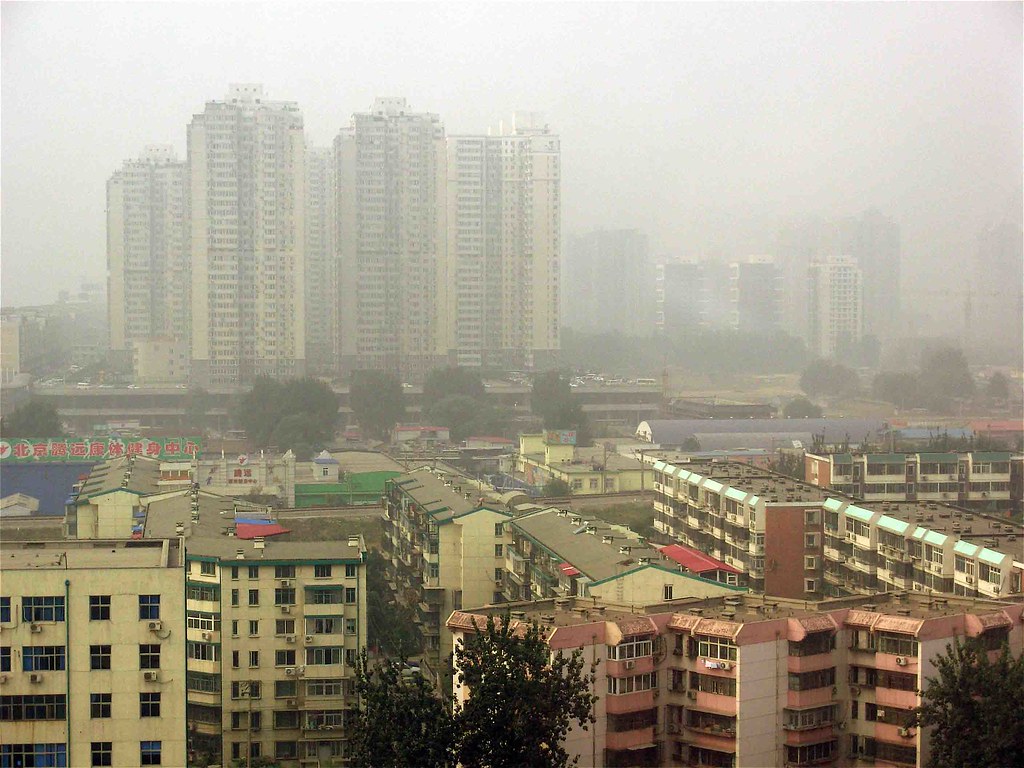
Beijing's residential rental market is changing fast. A new generation of build-to-rent (BTR) complexes, professionally managed, purpose-designed, and backed by institutional capital, has pushed into neighbourhoods from Tongzhou in the east to Fengtai in the south, offering long-term tenants a product that the city's fragmented private rental sector has never reliably provided: stable leases, standardised fit-outs, and on-site property management.
The timing matters. Average new home prices in Beijing's core districts have remained elevated well above RMB 80,000 per square metre across much of Chaoyang and Haidian, placing a standard 90-square-metre flat beyond the reach of most households without multi-generational financial support. A buyer stretching into that market in mid-2026 faces down payments that routinely exceed RMB 2 million before a single mortgage payment is made. Against that backdrop, the BTR sector is no longer a niche for expatriates or the young mobile workforce, it is increasingly a rational long-term choice for a broader slice of the city's residents.
What Build-to-Rent Actually Looks Like on the Ground
The model differs substantially from renting a flat through a private landlord on platforms like Beike or Ziroom. BTR projects are typically developed and operated by a single entity, often a state-backed developer or a joint venture with a real estate investment trust structure, which means tenants deal with one management company for the life of their tenancy rather than navigating individual landlord negotiations every twelve months.
Long-term Apartment (长租公寓) projects under programmes backed by the Beijing Municipal Commission of Housing and Urban-Rural Development have expanded significantly since the city's 2021 policy push to channel more residential land specifically toward rental supply. Several large complexes now operate in Tongzhou's Yuntai District and along the Fengtai Science and Technology Park corridor, targeting working professionals who commute into central Beijing via Line 6 and the soon-to-be-extended Line 11. Monthly rents at managed BTR units in these zones typically run between RMB 5,500 and RMB 9,000 for a one-bedroom, depending on floor level and finishing standard, meaningfully higher than comparable private rentals in the same postcode, but bundled with services that private landlords do not offer.
Those services matter to tenants making a direct rent-versus-buy calculation. Standard BTR offerings in Beijing's newer schemes include lease terms of two to three years with capped annual rent escalation clauses, furnished interiors with appliances, communal amenity spaces such as co-working lounges and gyms, and 24-hour maintenance response commitments. Some projects in the Wangjing submarket in Chaoyang, already a dense node for technology sector workers from companies based in the nearby 798 and Jiuxianqiao corridors, have added childcare tie-ins and shuttle links to metro stations as differentiators.
The Numbers Behind the Rent-or-Buy Decision
The arithmetic for prospective buyers remains punishing. A household earning RMB 30,000 per month combined, a solid dual-income figure in Beijing's professional class, would face a mortgage repayment of roughly RMB 18,000 to RMB 22,000 monthly on a modestly priced Chaoyang flat purchased at current market rates under a 30-year loan at the current Loan Prime Rate of 3.1 percent, which the People's Bank of China adjusted earlier this year. That leaves thin margin for living costs, savings, or financial shocks. Renting a comparable BTR unit at RMB 8,000 per month frees substantial monthly cash flow, even accounting for the absence of asset accumulation.
The government has signalled it wants this sector to grow. The National Development and Reform Commission has flagged build-to-rent as a structural pillar of its housing stabilisation agenda, and Beijing's city government has set targets for increasing the proportion of rental housing in overall residential supply through 2030.
For renters weighing their options now, the practical advice is straightforward. Seek BTR projects registered under the city's official long-term apartment licensing scheme, which provides regulatory oversight absent from the private landlord market. Verify the rent escalation cap in any lease before signing, legitimate managed schemes in Beijing cap annual increases. And treat the higher headline rent not as pure cost, but as a price paid for stability in a market where ownership remains, for now, a receding horizon for many.
This article is general information only and is not personal financial or investment advice. Consider your own circumstances and seek licensed professional advice before making financial decisions.